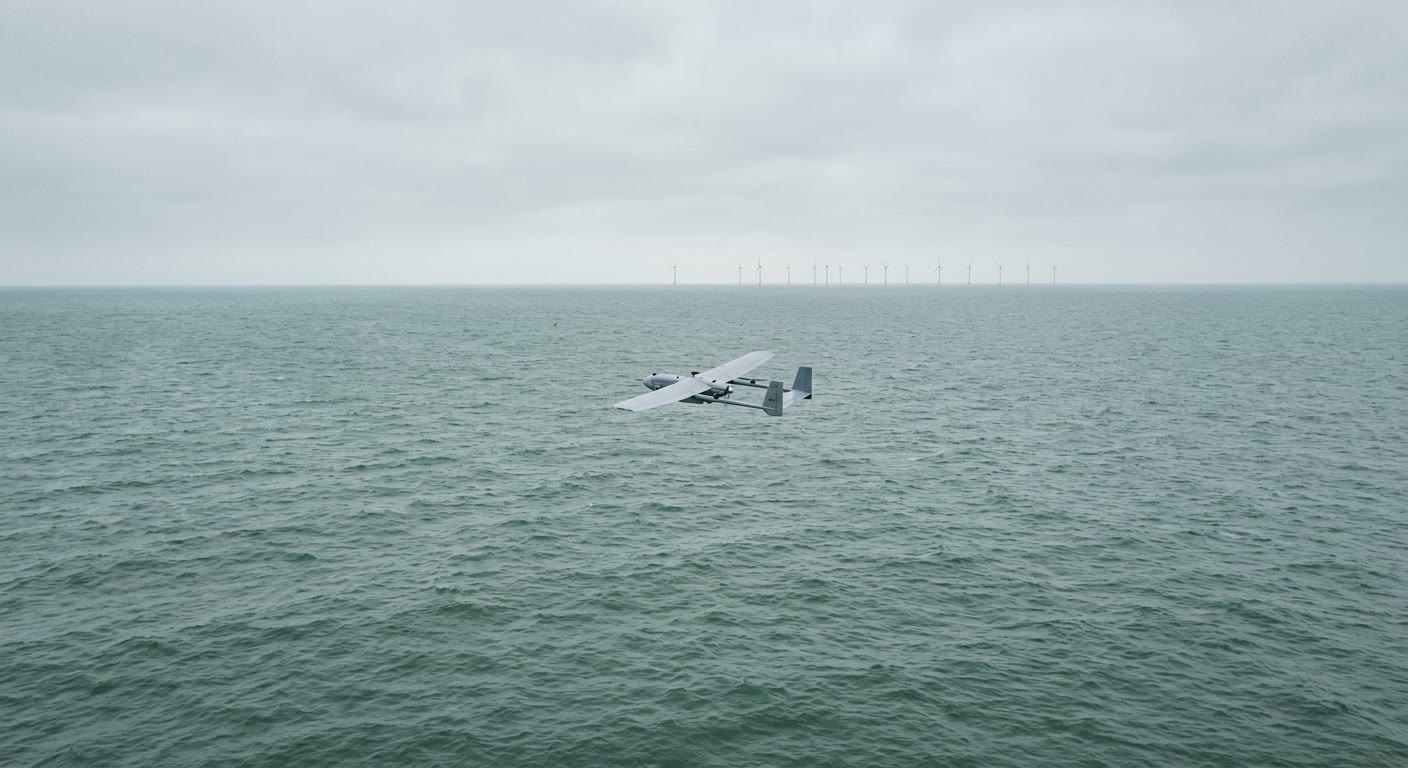
The CAA consults on drone flights over the high seas
The Civil Aviation Authority opened a consultation on 28 September 2026 on how civil drone flights beyond UK territorial waters should be handled. The consultation page says the regulator is "seeking stakeholder feedback on a proposed approach to enabling Civil UAS flights over the high-seas areas of UK-delegated FIRs". It closes on 8 November 2026. The proposals are set out in CAP 3312.
The problem the CAA is trying to solve is one of jurisdiction. In CAP 3312 it states: "The UK cannot apply its domestic UAS rules beyond 12 nautical miles (NM) from the UK coastline". At the same time, the UK provides air traffic services across the high-seas parts of the London, Scottish and Shanwick Oceanic flight information regions, and drone activity is already happening there. The document says "UAS are used for a range of offshore activities such as infrastructure inspection, survey, research and environmental monitoring", and that "Evidence that this activity is expanding includes UK Operational Authorisations (OAs) held by organisations conducting work for offshore oil and gas and renewable energy companies". Today, it says, "there is currently no agreed approach for how such activity should be notified to, or coordinated by, the UK".
The proposed fix is coordination rather than a new licence. All drone activity in those areas would be treated as potentially hazardous to civil aircraft for coordination purposes, with the consultation page describing the second limb as "expecting UAS operators intending to fly in these areas to provide a defined set of basic information in advance of operations". The CAA, working with NATS, would then decide what airspace measures, if any, are needed. CAP 3312 says the approach works "without asserting new regulatory powers beyond 12 NM" and "Can be implemented through concise AIP text and internal procedures without the need for new primary legislation". In its words: "This model would be implemented through a new section in the UK AIP".
Among the intended outcomes the CAA lists are to "Reduce the risk of conflict between UAS and civil aircraft operating in the high-seas portions of UK-delegated FIRs" and to "Provide a single, consistent coordination process for both UK and foreign UAS operators".
The consultation asks three questions: whether respondents agree with treating all such activity as potentially hazardous for coordination purposes, whether they agree that operators should provide basic information in advance, and any further views. The page says "Input is invited from UAS operators, the general aviation community, ATS providers and other stakeholders".
Prisons: counter-drone bids open
The Ministry of Justice announced a package of prison measures on 28 September 2026, "announced by the Lord Chancellor today (28 September)". On drones, the release says: "The package includes the next phase of a £6.5 million UK Research Innovation investment to develop new tools to tackle drones around prisons. Technology firms are being invited to bid for a share of up to £900,000 to test new solutions that help protect staff and clamp down on the smuggling of contraband behind bars."
It adds: "This follows £35 million announced in June to strengthen security at our most at-risk prisons, including heavy duty window grilles, helping stop drones being used to smuggle drugs, weapons and phones that fuel violence behind bars." The scale of the problem, according to the release: "There were 1,497 recorded drone incidents at prisons in England and Wales in the year to March 2026."
The rest of the package covers drug recovery units, a construction skills programme, community payback and accommodation for prison leavers, and is not about drones.
Viking Drone Packaging's VCA first
Published here this morning: Viking Drone Packaging of Chichester has received a Letter of Recommendation from the Vehicle Certification Agency for a crash protected container built to carry radiopharmaceuticals by drone. The company says the recommendation does not itself authorise commercial drone operations and that CAA approval is still needed before operators can carry dangerous goods. The full story is linked below.
Why it matters to UK operators
Two of today's three items are about the regulator and the state setting terms rather than about a company selling something. The high-seas consultation is the one to read if you hold an Operational Authorisation for offshore work: the CAA is proposing that flights beyond 12 nautical miles come with an advance notification and a coordination step, handled through the UK AIP rather than a new authorisation regime, and it is asking operators directly whether that is proportionate. Responses are open until 8 November 2026. The prison funding is a smaller and more specific opening, for counter-drone technology firms rather than operators, with bids invited for a share of up to £900,000.