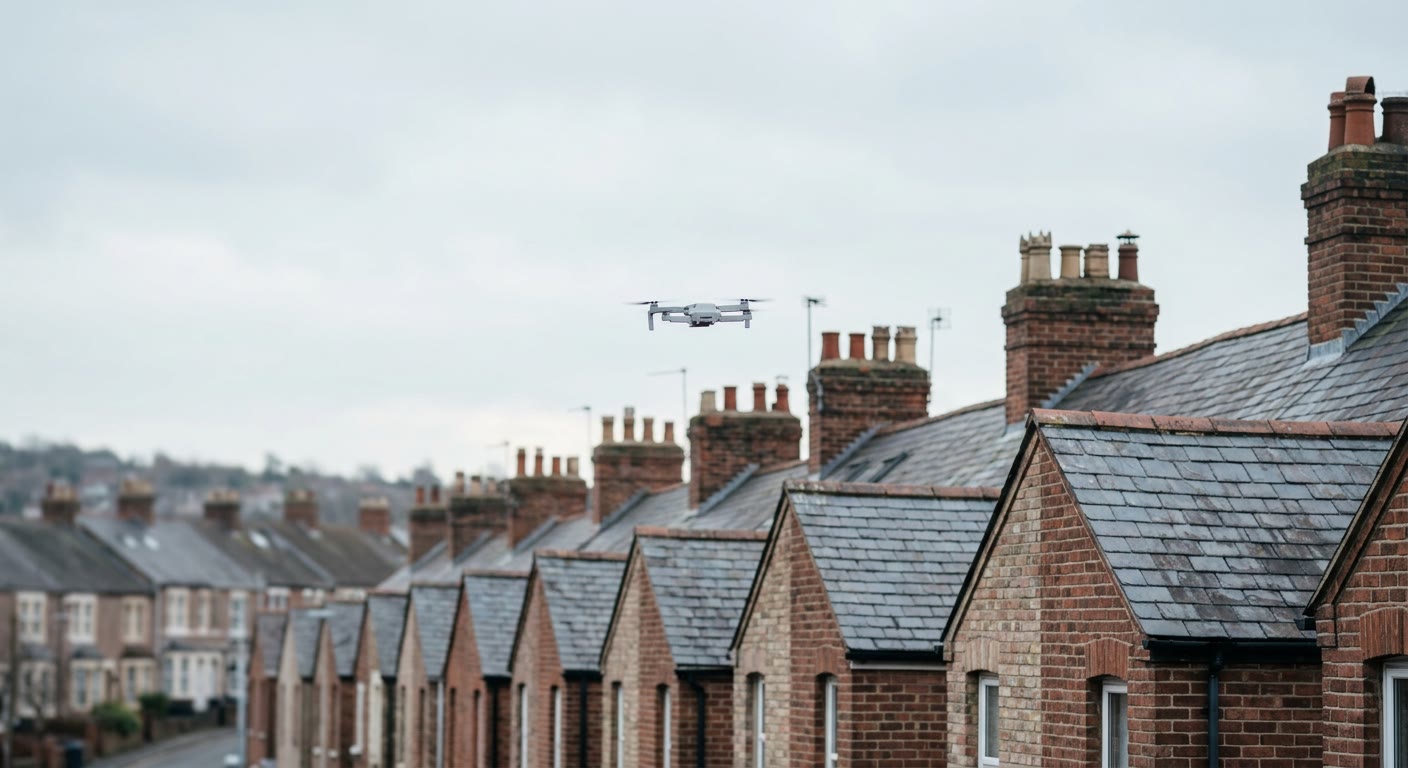
The Civil Aviation Authority has published CAP 3304, "Managing Noise from Emerging Aviation Technology". The CAA's publication page lists it as version 1 with a version date of 29 September 2026, and says it "examines how noise from drones and electric vertical take-off and landing aircraft could be assessed and managed as these technologies develop in the UK".
Who asked for it
The report says the Department for Transport "requested the Environmental Research and Consultancy Department (ERCD) of the Civil Aviation Authority (CAA) to advise on the issues relating to, and the potential components of, a noise management system for the two main categories of electrically-powered emerging aviation technology". It names those categories as drones and eVTOL aircraft. It draws on "the various technical and engagement activities undertaken by ERCD over the last two years".
It describes its fourth chapter as setting out "potential noise management options which aim to fill the residual gaps and may be considered by DfT for future policymaking".
What it finds
The executive summary states: "A key finding is that their noise impacts may differ in important ways from those associated with conventional aviation." It goes on: "While some platforms may be quieter at source, lower-altitude flight, distributed operations, hover and vertical flight, operation close to homes and potentially higher movement frequencies may create new patterns of noise exposure."
It adds: "The acoustic characteristics of some aircraft may also result in greater annoyance than other environmental noise sources at comparable sound levels."
On the evidence, the executive summary says "The evidence base remains limited and is still evolving" and "There are also no robust UK-specific exposure-response functions for annoyance or sleep disturbance from routine drone and eVTOL operations."
On sound levels, the summary of chapter four says: "Available evidence suggests that some drone and eVTOL operations may give rise to noise exposure above the 51 dB LAeq,16h LOAEL reference used in conventional UK aviation policy, not only for service users but also for neighbouring receptors." The next sentence qualifies it: "Although this should not be treated as an established drone-specific effect threshold, it provides a useful indicative comparison pending drone-specific exposure-response evidence." The report's glossary defines LOAEL, the Lowest Observed Adverse Effect Level, as "The noise level above which adverse effects on health and quality of life begin to occur".
Approval routes and noise assessment
The conclusions say: "The regulatory route taken by an operation may affect whether and how noise is assessed." It says "CAP1616 version 6 and its supporting documents establish proportionate processes for permanent and non-permanent airspace changes", then adds: "However, some operations may proceed through operational authorisation within the existing airspace design and will not necessarily be subject to an equivalent standardised environmental assessment."
The paragraph ends: "Achieving greater consistency across these routes is an important policy objective, while recognising that requirements should remain proportionate to the scale, duration, location and likely effects of the operation."
On existing rules, the report says: "The UAS framework also contains express obligations to minimise noise, while the UK class-marking framework now includes product-level sound power requirements for some uncrewed aircraft."
What it says about restrictions
The conclusions say: "No single noise-management measure will be sufficient." Later in the same paragraph: "Operating restrictions may therefore be required in some circumstances, including limits on operating hours, movement numbers or activity in sensitive locations."
The chapter four summary sets out 23 numbered measures. One reads: "Develop tailored noise-abatement procedures for inspection and other non-delivery drone operations." Another reads: "Require operators to respond to complaints arising from their operations, supported by consistent complaint-handling and reporting approaches."
Of the measures in the chapter, the report says: "The measures identified in this chapter provide a menu of potential policy responses rather than a single prescriptive framework." It also says: "Although the chapter presents some more innovative and longer-term options, the initial focus should be on developing appropriate standards, assessment methods and proportionate controls."
The next 6 to 12 months
Under the heading "Early priorities", the report says: "A number of practical measures could be progressed over the next 6 to 12 months without waiting for definitive exposure-response functions or a mature national regulatory regime".
Eight measures follow. They include to "establish a common minimum dataset for relevant trials and early deployments, covering aircraft type, flight path, altitude, time, duration, operating mode and movement numbers", to "establish minimum expectations for operator transparency and engagement, including advance information about operations, accessible contact arrangements and reporting of findings", and to "clarify how noise should be considered across airspace change, operational authorisation and planning routes".
A first edition of national drone noise policy
The report says: "A first edition of a UK drone noise policy should be transitional and capable of development as evidence improves. It should not attempt prematurely to establish definitive drone-specific effect levels or comprehensive numerical limits."
It lists ten things such a policy should do "As a minimum". Two of them: "establish proportionate assessment tiers, linked to factors such as duration, movement frequency, operating height, time of day, proximity to sensitive receptors and the scale of the potentially affected population" and "require consideration of the full operation, including launch, climb, cruise, hover, approach, delivery or inspection activity and return flight".
On further measures, it says: "More interventionist measures, such as regional noise-management arrangements, coordinated movement caps, noise budgets or compensation mechanisms, should be considered only where operational density and evidence of cumulative impact justify them and where an appropriate legal, technical and institutional framework exists."
What could apply first
On timing, the report says: "The first edition should distinguish between requirements that can be applied immediately and matters that remain dependent on further evidence. Immediate requirements can include data collection, transparency, engagement, proportionate assessment and the consideration of practicable mitigation."
The full document is on the CAA's publications site as CAP 3304.