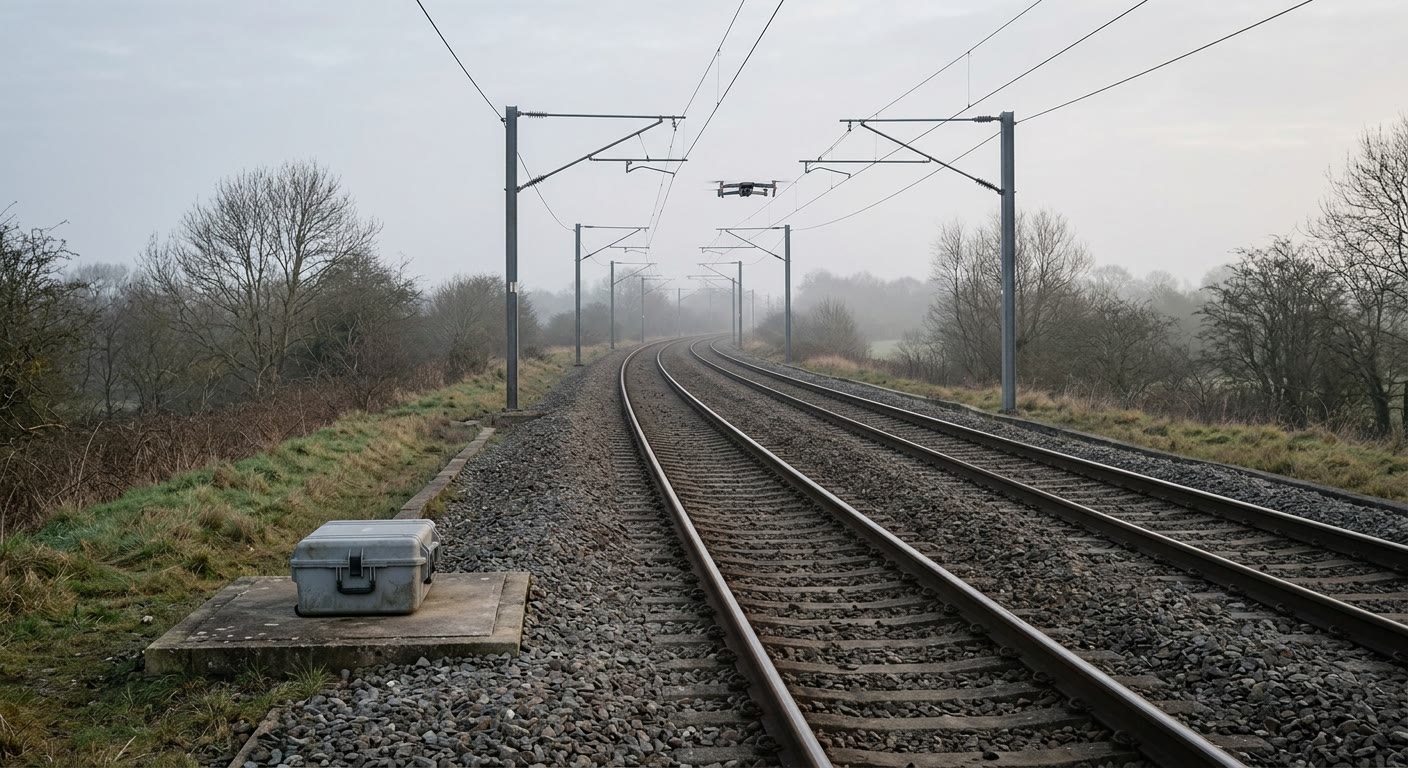
British Transport Police is now flying drones beyond visual line of sight as part of its day-to-day work, according to a release published by BT on 16 September 2026, which describes BTP as "the first police force to routinely operate national Beyond Visual Line of Sight (BVLOS) drones as part of day-to-day police operations".
The release is BT's account of a joint programme with the force. It says the two "have developed and launched a scalable Drone as First Responder capability that allows drones to be launched remotely from strategically located drone-in-a-box stations and piloted from BTP’s operations centre in London Bridge". Routine operations began "earlier this year", the release says, without giving a date.
The numbers in the release
BTP "currently operates 7 drone-in-a-box locations across the rail network, with plans to expand with up to 14 sites over the next 2 years", the release says. The force polices "more than 20,000 miles of railway".
On why the force wants aircraft in the air before officers arrive, the release cites Network Rail's records: "In 2023/2024, more than 19,300 trespass incidents, approximately one every 30 minutes, occurred across the rail network." It adds that "officers have often needed to travel significant distances before assessing the situation".
How the link works
The drones fly over EE's mobile network using what BT calls its Drone SIM. The release says operators "can securely maintain command-and-control connectivity and stream real-time UHD video, even beyond Wi‑Fi coverage and in complex RF environments".
Simon Bachelor, head of the drones programme at British Transport Police, is quoted: "As the first UK police force to routinely operate BVLOS drones as part of day-to-day policing, we are transforming the way we respond to incidents across the rail network. Real-time aerial intelligence enables our teams to assess situations faster, deploy resources more effectively and improve safety for both officers and the public."
Sian Penny, BT's public safety and justice director, says the company has "built on that experience in our work with the British Transport Police", and that the work is "giving officers real-time intelligence, improving safety and helping the rail network respond more quickly when incidents occur".
Why it matters to UK operators
What the release describes is a drone-as-first-responder model on British infrastructure: aircraft launched remotely from drone-in-a-box stations and flown from a control room in London, with the command link and the video feed carried over EE's mobile network. For UK operators, it is a description of BVLOS flying as ordinary daily work rather than a trial, on national infrastructure, from a supplier and a police force willing to put their names to it.
It also means more police aircraft over the railway. The release says the drones are launched remotely and piloted from London Bridge, so anyone flying near the rail network should expect BTP drones to be operating without a pilot standing nearby.
What the source does not say
The release does not name the drone models, the drone-in-a-box supplier, or the CAA authorisation under which the flights take place. It does not say where the seven current sites are, when "earlier this year" was, or what the flights have been used for since they began. It gives no cost. UK Drone Directory has not seen a statement from British Transport Police beyond the quote in BT's release; the force's own website refused automated requests when checked on 16 September 2026.