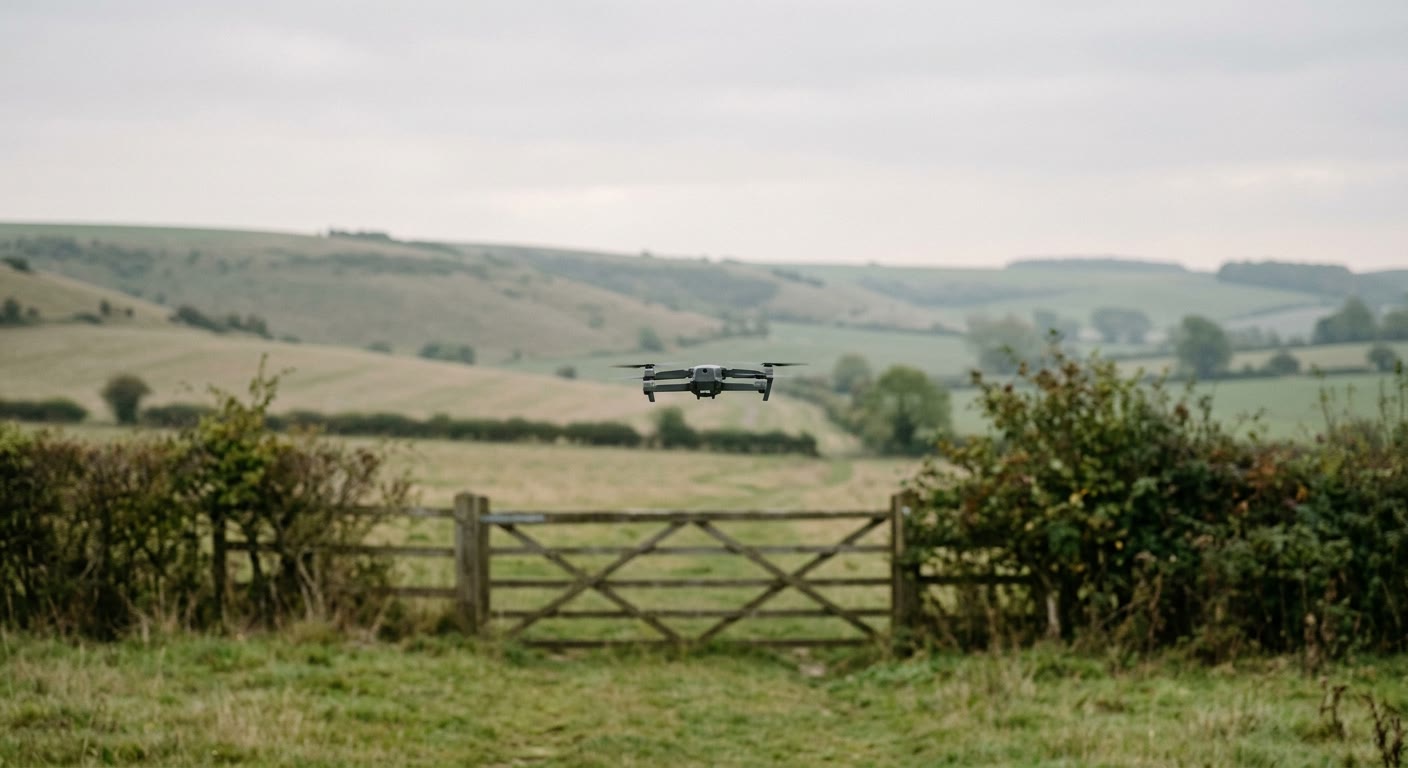
Trained community volunteers can now be sent by a police control room in Hampshire to fly drones at live rural incidents, under a pilot scheme that Hampshire and Isle of Wight Constabulary believes is the first of its kind in the country.
The Police and Crime Commissioner's office says that "trained community volunteers can now be deployed by the police control room to provide drone support to live incidents in rural areas", and that the drones "will support police responding to offences such as hare coursing, poaching and burglaries, while helping gather evidence and improve intelligence from local communities".
The scheme currently runs with five people. The commissioner's office says "the pilot currently involves five volunteers who have completed a bespoke drone operators' course, with plans to expand the scheme in the future". Its launch was timed to Rural Crime Action Week, which the same release gives as 8 to 12 September.
Volunteers alongside the force's own kit, not instead of it
Inspector Stu Ross, who has been leading the project, places the volunteers next to equipment the force already runs. "These skills will complement the existing technology we have in our arsenal to combat rural crime such as police drones, mobile ANPR cameras and trail cameras, in addition to the expertise we have in our Country Watch Rural Crime Task Force which is made up of officers and staff with specialist qualifications and knowledge in matters including the identification of stolen plant, heritage crime and wildlife crime," he said.
He also said: "I am incredibly grateful for the volunteers we have recruited so far, who are lending their skills to pilot drones and assist officers on the ground dealing with crimes in action."
What it costs and who is paying
Police and Crime Commissioner Donna Jones has contributed £25,400 from her Rural Initiative Fund, which her office describes as going "to help tackle rural crime in the Test Valley". Test Valley Borough Council has match funded that contribution, and the Farming in Protected Landscapes grants have provided £34,158.05.
Jones said the scheme could grow: "This pilot will improve the intelligence police receive and, in turn, the police response to reported incidents. If it is successful, I will roll it out across the whole police force area."
Why this one is worth watching
Police forces flying their own drones is now unremarkable. What is different here is the deployment model: civilian pilots, trained to a course the force specifies, held on call and tasked by a control room to attend incidents as they happen. That is closer to how a force uses a volunteer specialist than to how it buys a piece of equipment, and if it is judged a success the commissioner has said she intends to extend it across the force area.
For operators, the interesting question is what the route in looks like — and it is not yet answered in public.
What the sources do not say
Neither the commissioner's release nor the reporting of it states what qualifications the volunteers held before the bespoke course, what aircraft they fly, whether they operate under the force's own permissions or their own, how they are insured, or whether recruitment will open beyond the Test Valley area that the commissioner's funding names. Anyone weighing this up as a route into police-adjacent work should treat those as open, not assumed.