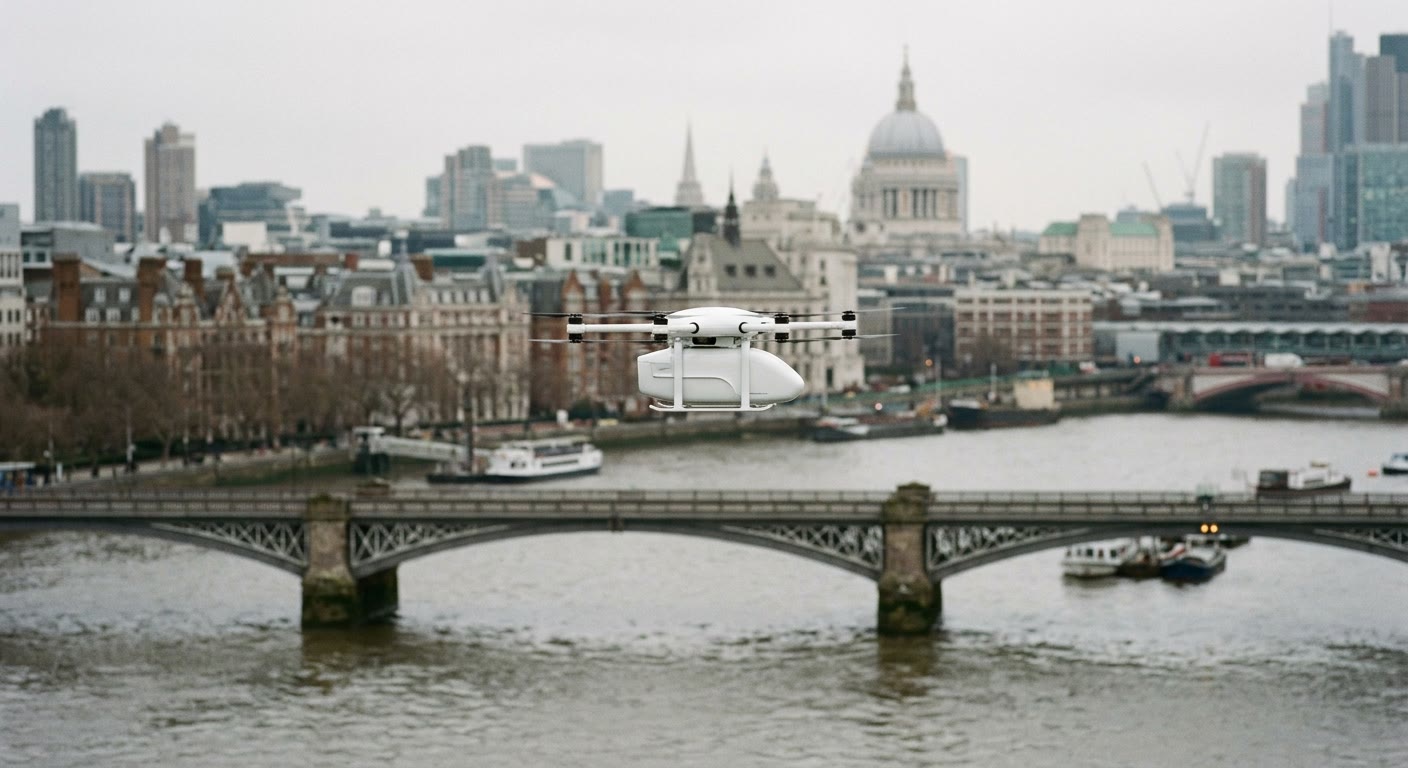
SYNLAB Group announced on 7 September that Synnovis, its pathology partnership with the NHS in south east London, has entered what it calls a "strategic partnership" with Apian "to further develop the use of drones and autonomous robotics in pathology logistics". The stated aim is to "improve the speed, resilience and cost effectiveness of sample delivery".
What is actually changing
The new work builds on a pilot that SYNLAB says began in 2024 and delivered "over 6,000 pathology samples between the Synnovis labs at Guy's and St Thomas' hospitals". On that route, the company says, "samples were transported between sites in less than two minutes compared to more than half an hour by road", and the flights are "zero emission during flight".
The expansion adds a third site. "This autumn, Synnovis will expand its use of drone logistics with Apian deploying Matternet drones to transport urgent samples in London, from both Guy's Hospital and St Thomas' Hospital for specialist testing at the Synnovis Blackfriars laboratory hub," the release says. The first of those flights "will carry bone marrow samples critical for the diagnosis and monitoring of blood disorders such as acute leukaemia, including for paediatric patients treated at Evelina London Children's Hospital".
SYNLAB adds that "plans for routes to serve additional Synnovis customers" are under way, without naming them or giving dates.
Where this sits in the London network
The original Guy's to St Thomas' service was flown by Wing. Apian's own release in January this year described that first phase as having "safely transported over 6,000 patient samples" and as "reducing CO₂ emissions by 98.4% per delivery compared to dedicated urgent ad hoc courier vans", and said its south west London extension was "proceeding following approval from the UK Civil Aviation Authority".
Matternet is the newer partner. DroneLife reported on 24 April that Matternet had "launched drone delivery operations for the UK's National Health Service (NHS) in Central London, marking its first deployment in the United Kingdom", connecting "two major hospital campuses using bi-directional aerial routes", and that "the launch follows coordination with the UK Civil Aviation Authority". The Blackfriars route is the first time SYNLAB itself has said publicly which aircraft will serve its hub.
Why it matters to operators
As far as we can see, medical logistics is the only civil use in the UK where regular drone delivery flights over a dense city have become routine rather than a trial, and these partners keep adding sites rather than winding down. That is our reading of the announcements, not a claim any of them makes. That is worth watching for two reasons. First, it is producing the operational evidence, on real routes with real timings, that the CAA and hospital trusts will point to when the next applicant asks to fly something similar. Second, the customers in this market are pathology networks and NHS trusts, and they are buying an outcome, sample turnaround, rather than a drone. Operators pitching to them will be compared against a two-minute benchmark that is now in print.
We have not seen the Matternet permissions for the Blackfriars route, and SYNLAB's release does not describe them. If you fly in central London, the operative documents remain the CAA authorisations held by the operators involved, not this announcement.